It really is true what they say, "Time goes by fast, when you're having fun". It is the last Friday of our Gotham New York Experience, and we are heading towards the Lower Eastside and exploring Immigrant New York. We will be focusing on immigrant life in the city for the last two hundred years. Our first stop was Delancy Street, where we stopped by the historic
Essex Street Market. Here, we were able to view (and sample) many different ethnic foods from around the world. For example, I was able to see some foods from Puerto Rico. This market was built in 1940 and was at first home to pushcart peddlers who offered different kinds of food such as Latino, Jewish, and upscale urbanite (chicken gizzards, nopales, and fish cheeks) (BG p.123). These pushcart peddlers were at first located on the streets, but Mayor Fiorello La Guardia legislated them off the streets and into this market. It was a fun experience being able to look at the different types of food that each country had to offer.

After the Essex Street Market, we walked a few blocks to the
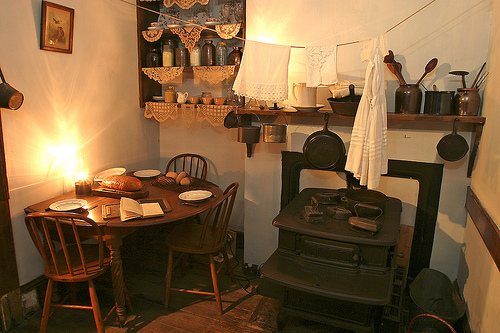
Tenement Museum, where we were given a tour that focused on the life of the Moore family. This museum was founded in 1988, and was once a tenement. This museum's focus is to preserve the heritage and honor the millions of immigrants of the Lower Eastside (BG p.122). The museum is a six-story Italianate brownstone that houses five apartments. It has been restored to its 19th century appearance in order to recreate the Moore family's experience (BG p.122). During the tour, we were first shown pictures of what the neighborhood was like. Streets were filled with mountains of garbage. We had also seen pictures of everyday life and how women would be crowded and doing laundry together and maybe gossiping or catching up. We had learned of the difficult life that many immigrants such as the
Moore family had to deal with. For example, one story that our tour
guide told us was the hardships in trying to find a job. Many of these
immigrants came to America for a better life, however, once arriving
here, they were discriminated and denied of any jobs. The inability to
find a job, therefore made it very difficult for families to get by. For
example, the Moore family's youngest child, who was only a few months
old, became sick because of the milk that was being fed to her. Milk
back then was not pasteurized and even contained chalk to make it the
color white. The Tenement Museum was probably my favorite part of the
day. It was not just a regular museum where you look at artifacts behind
a glass or in a frame. When walking into the rooms, you were able to
take in the room and be able to almost live and experience what the
Moore family was experiencing. I highly recommend this museum to anyone.
The tour guide was very informative as well and made the tour very
interesting and fun.


After visiting the Tenement Museum, we headed to lunch at
Congee Village, a few steps away from the museum. Here, we were able to enjoy
authentic Chinese cuisines. The food was very delicious and I especially
enjoyed the batchoy. After enjoying our lunch at Congee Village, we
were given a tour of the Lower Eastside, the Bowery, and parts of Little
Italy and Chinatown. Our tour guide, a local historian guided us
through Immigrant New York. We had learned a lot with this tour. Our
tour guide first started out by giving us some statistics on Immigrant
New York, such as how the percentage of people in NY who were not born
in America, is 36%,which is the same percentage as it was back then when
immigrants came from Ellis Island.
We then headed to Orchard Street, where we had learned that it was
the center of the Jewish community. Orchard Street was named after the
apple orchards on the 18th century farm of James De Lancey (BG p.120). It is considered the district's main shopping street, where many people can haggle and shop over handbags or home decorating fabrics. Our tour guide showed us a picture of Orchard Street and how it was back then. The picture showed a street that had mountains of garbage and horse feces, and when it snowed, snow would be on the bottom, covered up by the garbage and feces. We had also learned that during that time, there were no greenspace, it was in the streets where children played and gathered. Our tour guide also told us about
Seward Park High School, which was an immigrant school, that consisted of 1% white and 99% non-white. At the time, there were also garment factories, where women worked in sweatshops. It is very hard to believe that where we were standing, this place once existed. Now, this place is even showing signs of gentrification where art galleries are starting to appear.
We then headed to
Hester Street, which was a place that had rows and rows of tenements and no park. Hester Street also once had a push cart market that stretched a few blocks north and south. We had also learned about
Jacob Riis, a reformer who during the Progressive era pushed for parks. He believed that we should use the city to provide amenities. The first municipal playground was therefore created. It had however become the ghetto and the slum when peddlers would sell stuff. Before the 1930's, peddlers did not need to have a permit to sell things, however this was changed due to health code violations. We also visited the Independent Kletzer Aide Association, which was used to help out immigrants in Kletz. This was an example of how Eastern European Jews would be scattered throughout Immigrant NY and how different towns from different countries would come together in NY.
After Hester Street, we headed to Canal Street to the
Forward Building. The Forward Building was built for the Jewish Daily.Forward,
the country's most influential Yiddish daily newspaper at the time (BG
p. 124). It was considered the largest Yiddish newspaper in the city.
Its editor was a socialist and the newspaper was completed in 1912. It
was a major ethnic language newspaper that covered conflicting immigrant
issues, small salary that immigrants got paid while working 12 hour/day
6 times a week. There would also be labor parties outside.
After learning a bit about
Canal Street, we headed to Chinatown where
we had learned that it has been expanding in the last 30-40 years.
Chinatown was also considered a center for illegal immigration, where
people from China would be smuggled through boats to arrive in Latin
America and then the U.S. An agency would then find the person a job. We
had also learned that since it cost a lot of money to get smuggled to
the U.S., some people didn't have enough money to pay the agency when
they arrived and therefore had to make payments to them and were
indebted to them. Chinese immigrants were also able to travel
throughout the country. This was made possible by the Transcontinental
Railroad, which was completed in 1869. Peasant laborers in the West who
were brought to build the railroad, were faced with racial hostilities
and would travel eastward (BG p.108). Racial hostilities and
discrimination towards Chinese people erupted even more with the Chinese Exclusion Act which lasted 61 years from 1882-1940. This ended because Chinese became an ally of the U.S. during World War II. We then headed to the Eldridge Street Synagogue, considered a landmark because it is the oldest Eastern European Jewish synagogue. It was designed by 2 German architects. It was considered the grandest synagogue on the Lower East Side, drawing in many worshipers during the high Holy Days. Police were even sometimes called to control the crowds (BG p. 120). We then headed to
Yung Wing School, which was connected to a Plaza. We had learned that Yung Wing was the first Chinese person to get a college degree in Yale University. He converted to Christianity and was responsible for building Western schools in China.
We then headed to Doyers Street. Dowyer, Pell, and Mott Street, we had learned are considered the oldest streets. Doyers Street was once known as
"Bloody Angle". This was due to the crooked, narrow streets that would hold sword fight games against two powerful families, the Hip Sings and On Leongs (BG p.112). We then visited the
Church of Transfiguration, which was once a Zion Episcopal Church, but is now a Roman Catholic parish that hold their masses in Cantonese, Mandarin, and English (BG p.112). We had also learned about Five Points and how it was the center of prime poverty, especially for the Irish and African Americans who lived there. This was due to the hardships in trying to find a job.
We then ended out day in
Little Italy. Little Italy today has now become a tourist spot, where it is attracting visitors to its Italian restaurants (BG p.114). It was here where we said our bittersweet farewells and headed for some cannolis at Ferrara Bakery and Cafe.

.jpg)




 Another Friday, another opportunity to get to know the city a little better. Today, we are going to explore lower Manhattan and Chelsea. We departed from Penn Station as usual, and headed to the World Trade Center (not the Freedom Tower, as emphasized by Meritta) and St. Paul's Chapel. While standing in between the One World Trade Center and the Trinity Church, we were given a brief history of the two buildings. During September 11, 2001, terrorists had crashed two planes into the Twin Towers, which were two office buildings that were part of the World Trade Center complex. In the Spring of 2002, the debris that had resulted from the attack, had been cleared away and a construction of a new building is now being made. This building is called the One World Trade Center and it is located just north of the former plaza at 250 Greenwich St. This building was made to symbolize the date of American independence in 2006 (BG p.62). Reconstruction of the office towers by Daniel Libeskind are still in the process, causing much conflict and financial overruns (BG p.62). Looking at the construction of the building, it was hard not to get a little emotional. It sometimes seems as if 9/11 had just happened yesterday, and already there are new constructions being done. After the event of 9/11, rescue workers, such as volunteers, fire fighters, and police officers took refuge in St. Paul's Chapel. St. Paul's Chapel is Manhattan's only remaining colonial church and was built as a subsidiary chapel for Trinity Church (BG p.77). Today, this chapel has now become a small, temporary memorial in remembrance of the victims, family members, and workers affected by the event of 9/11. When we entered St. Paul's Chapel, it was filled with paraphernalia, such as flowers, photos, and teddy bears. St. Paul gives off a very comforting ambiance, and it is the perfect place for people to mourn and remember those who have been affected by 9/11.
 Our next stop was Wall Street, the financial district and the heart of capitalism. It is a third of a mile long and runs between Broadway and the East River (BG p.64). Wall Street got its name from a wall that was built in order to protect the Dutch town from British neighbors (BG p.64). As we walked the streets of Wall Street, we had passed by the famous New York Stock Exchange, the largest stock exchange in the world. The New York Stock Exchange first moved to Wall Street in 1903. Once a place for premier banks and major corporations, is now turning into a place filled with restaurants and hotels. Today, Wall Street has also become the backdrop of Occupy Wall Street (OWS). OWS is a protest movement that centers around the issues of economic and financial inequality and the influences of corporations on government. OWS has made Wall Street a scene of radical protest. After walking through Wall Street, we headed to the Trinity Church on Broadway. Trinity Church, a Gothic Revival church, is one of the famous churches in New York City because of its history, dramatic setting, and attendance of famous people during the Revolutionary period.. What was once the tallest building in Lower Manhattan, is now overshadowed by gigantic office buildings. It is 79ft wide and 166ft long (BG p.65). This church, which dates back from 1846, is the third on the site. The first church in 1698 was burned in 1776, and the second church, which was completed in 1790, was demolished in 1839 after a heavy snowfall on the roof (BG p.65). We admired the church's impressive front doors which were modeled after Lorenzo Ghiberti's famous bronze doors of the baptistery of the cathedral in Florence (BG p.65). We also went to the churchyard, where we viewed the graves of Alexander Hamilton and Robert Fulton.


 As we get to know the borough of Manhattan a little better, it was time to explore the Harlems and a little bit of Morningside Heights. We first headed to East Harlem, which is the area east of Park Avenue and north of 96th St (BG p.437). In this area, there is a large Puerto Rican and Latino population, therefore this part of Harlem is also known as El Barrio or Spanish Harlem (BG p.437). Our first stop was the Museum of the City of New York, which was facing the far north side of Central Park. In the museum, we were able to view artifacts and collections of New York history, such as the history of the East River Waterfront. I had learned that it used to be a shoreline of farms, villas, and meadows at first and then during the 19th century, it was then inhabited by docks and piers, which was then followed by factories, slaughterhouses, coal yards, and breweries. We had also learned that there was an "ideas competition" towards Reimagining the Waterfront, called the East River Esplanade. The East River Esplanade is an area that consist of open areas, pedestrian bridges, and shoreline views. The competition is centered on inviting architects and city planners around the world to submit a redesign proposal for this Esplanade. We were also able to watch a short and informative film on the history of New York, called Timescapes: A Multimedia Portrait of New York. I enjoyed the film very much because it used 3 different screens to help explain the history of New York. For example, one screen showed shots of animated maps, while another showed pictures and quotes from famous New Yorkers. The film was also very interesting because we were able to visualize and see the progression of New York and how it has developed and the major paths of transportation. We had also learned how some areas in New York got its name. For example, "Canal Street" had gotten its name because it was simply a canal at first. After the film, a few of my friends and I headed to the exhibit called "Activist New York". In this exhibit, we were able to explore social activism in New York City dating back from the 17th century. One of the many things that caught my eye was the piece they had on John Bowne. This interested me because a few blocks from where I live in Flushing, is the actual Bowne House. I had learned that John Bowne, an English-born Quaker, was banished because he was hosting illegal religious gatherings in his home. Bowne, therefore, protested and won in his favor. It was declared that everyone was allowed to have their own belief as long as they behave quietly and legally. Bowne's activism was important because it helped extend protection for religious minorities. Another piece that also caught my attention was the piece on "New York Is the Battleground: Woman's Suffrage". This piece focused on the national movement for women's rights to vote. On May 21,1910, about 10,000 New Yorkers fought for this right. It was considered the largest woman suffrage demonstration in the country.


 After taking in the views of the Conservatory Garden, we then headed to central or what some may call mainstream Harlem on 125th St. Here, we were given a guided walking tour of the historic sites in the community. We had learned that Harlem was at first a fertile farmland that was taken over by the Dutch in 1658 . However, as the Harlem Railroad was built, more people were able to travel and settle in Harlem, such as German and Irish immigrants and African Americans. The Harlem Railroad reaches out from City Hall to the Harlem River (BG p.437). Although this railroad made it possible for development, it also acted as a barrier between the east and the west (BG p.437). We had also learned about what basically made Harlem what it is today, the Harlem Renaissance, which was the brief period from 1924 until the stock market crash of 1929 (BG p.439). The Harlem Renaissance was the rebirth of urban development such as in black literature, art, music, and political thinking (BG p.438). It is through the Harlem Renaissance where people such as Langston Hughes and Billie Holiday are known today. During our walking tour, Jim, our tour guide, spoke about the boycott in the Blumstein Store. Jim had also told us about Hotel Theresa and the Apollo Theater and how those places were the center of jazz music and where famous musicians such as Duke Ellington had first started out. The Apollo Theater is still being used today and is now run as a non-for-profit foundation (BG p.440). Jim even told us that in the Apollo Theater, it was tradition to rub the tree stump for good luck before any performer performed. During our tour, we had also passed by a few churches. Jim had told us that churches in Harlem have basically become political institutions. We had also learned about the famous Adam Clayton Powell Jr, who had protested against the department store. Other places that we had also passed by were Rice Highschool, Ephesus Seventh Day Adventist Church, and St. Martin's, which we found out had the largest carolone. Jim had also spoke to us about a man name Philip Peyton who was a real estate entrepreneur, helped populate Harlem. We had also learned about another man by the name of Marcus Garvey who created Black Star Line in order to ship African Americans back to Africa. We also visited the Marcus Garvey Park which was made because its steep, rocky terrain was not suitable for buildings (BG p.439). During our tour, we were also able to pass by a few brownstone houses. We had learned many things about the brownstones, such as the reason why there were so many stairs was done in order to wipe off any dirt of the shoes of any person entering the house. We had also learned that in the past, one family of 8-12 children would live there and the servants would live on the top floor. We had also passed by the Graham Court which had a classical design. We had also learned that its terracotta corness is now gone. We also walked by St. Nicholas St., which is the oldest street in New York City. We also saw Minton's Playhouse, which is where modern jazz began. We then ended the Central Harlem tour at the very inspirational and larger-than life Harriet Tubman sculpture. The sculpture had 70 faces on her skirt in order to symbolize the 70 people she rescued from slavery in the South.


